

Professional commercial snow plowing services optimize winter operations by employing strategic routing, advanced technology, and efficient equipment for quicker clearances. This reduces downtime, saves costs, and enhances safety compared to in-house methods. Outsourcing minimizes investments in equipment and training while offering scalable solutions adaptable to seasonal demands. Proactive management throughout the year can reduce plowing time, extend infrastructure lifespan, and enhance business reputation.
In regions with significant winter snowfall, efficient snow removal is more than a convenience—it’s a critical factor for businesses to thrive. The accumulated snow and ice can hinder operations, impact accessibility, and pose safety risks. Commercial snow plowing, or as it’s commonly known in these parts, professional snow removal, offers a robust solution. By employing specialized equipment and experienced teams, this service ensures swift and effective clearing of parking lots, entrances, and access ways.
This article delves into the multifaceted benefits, exploring how strategic snow removal strategies can save businesses time and money while enhancing operational efficiency and customer satisfaction.
- Efficient Clearing: Streamlining Commercial Snow Plowing Routes
- Cost Savings: Commercial Snow Removal Strategies for Businesses
- Safety First: How Professional Services Enhance Ice Management
- Time is Money: Benefits of Outsource Snow Removal Operations
- Long-Term Planning: Year-Round Solutions for Consistent Snow Management
Efficient Clearing: Streamlining Commercial Snow Plowing Routes
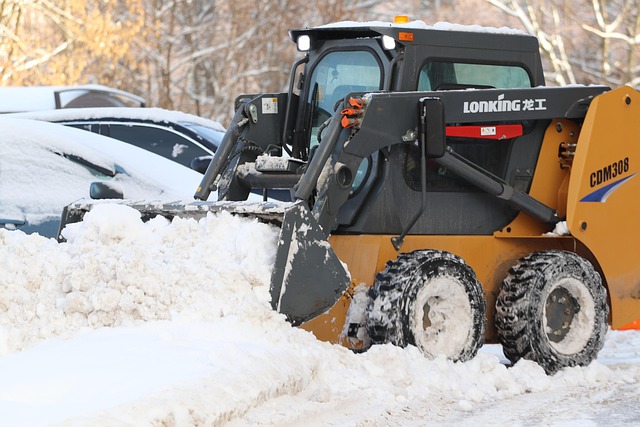
Professional snow removal services play a pivotal role in minimizing disruption and maximizing efficiency during winter storms. One of the most impactful aspects is efficient clearing through streamlined commercial snow plowing routes. By adopting strategic approaches, these services optimize snow clearance, saving businesses time and money.
Commercial snow plowing involves meticulously planning and executing routes to ensure swift removal of snow and ice from parking lots, driveways, and roads. Experts in this field utilize data-driven methods to identify the most effective paths, minimizing backtracking and maximizing coverage. For instance, a well-organized snow removal company might segment routes based on priority, focusing first on main entrances, emergency exits, and high-traffic areas. This strategic planning not only expedites clearance but also guarantees that critical access points are always accessible, fostering operational continuity during severe weather events.
Moreover, advanced technology empowers professional snow removal teams to adapt quickly to changing conditions. GPS tracking and real-time data allow for dynamic route adjustments, ensuring that plowing operations remain efficient even in unpredictable weather patterns. These technological enhancements enable companies to provide more precise service estimates, further streamlining their operations and client satisfaction. For example, a study by the Snow & Ice Management Association (SIMA) revealed that 85% of businesses reported improved operational efficiency after implementing advanced snow removal strategies, including optimized routing.
To capitalize on these benefits, commercial property managers should partner with reputable snow removal companies renowned for their efficient practices. Regular communication and collaboration ensure tailored solutions aligned with specific site requirements. By embracing data-driven approaches and leveraging technology, businesses can significantly reduce the time and financial burden associated with winter snow management, fostering a safer and more productive environment throughout the cold season.
Cost Savings: Commercial Snow Removal Strategies for Businesses

Professional snow removal services offer businesses a strategic approach to managing winter weather, significantly reducing costs associated with operational disruptions. Commercial snow plowing is not merely about clearing paths; it’s a complex strategy that includes efficient routes, specialized equipment, and timely response times. By outsourcing this task, companies can avoid significant expenses related to labor, equipment maintenance, and potential safety hazards.
One of the most direct cost savings comes from preventing downtime. Commercial snow removal teams are equipped and trained to clear paths swiftly, minimizing disruptions to daily operations. This prevents delays in customer service, delivery schedules, and employee commutes, all of which can lead to substantial financial losses. For instance, a study by Ice & Snow Management Association (ISMA) found that businesses experienced an average revenue loss of 5% during severe winter storms due to operational disruptions.
Additionally, commercial snow plowing services invest in advanced equipment designed for efficiency and safety. Snow blowers, tractors, and specialized trucks are engineered to handle large areas quickly, reducing the man-hours required. This not only lowers labor costs but also minimizes wear and tear on company-owned machinery. Businesses can leverage these investments by focusing resources on core operations rather than snow removal, ultimately streamlining their bottom line.
Safety First: How Professional Services Enhance Ice Management

Professional snow removal services play a pivotal role in ensuring safe and efficient ice management, particularly in commercial settings. When it comes to safety, these experts offer invaluable knowledge and resources. They understand the unique challenges posed by icy conditions, from reduced visibility to hazardous road surfaces. Commercial snow plowing is more than just clearing paths; it’s about implementing strategic protocols to mitigate risks. For instance, professionals employ specialized equipment like ice scrapers and salt spreaders, ensuring efficient deicing while adhering to safety standards.
One of the critical advantages lies in their ability to anticipate and plan for severe weather events. Meteorology is a powerful tool in their arsenal. By staying abreast of forecasts, they can proactively prepare, minimizing surprises that might lead to delays or accidents. This proactive approach translates into significant time and cost savings for businesses. According to industry surveys, well-managed snow removal strategies can reduce the average downtime caused by winter storms by up to 30%, allowing commercial operations to maintain productivity year-round.
Moreover, professional services prioritize employee safety and customer peace of mind. They provide comprehensive training on ice management best practices, ensuring that personnel are equipped to handle icy conditions effectively. This training covers everything from proper use of equipment to emergency response protocols. By empowering employees with knowledge, businesses can foster a culture of safety, preventing accidents and potential liability issues. Regular commercial snow plowing, guided by expert insights, becomes an investment in the well-being of everyone involved.
Time is Money: Benefits of Outsource Snow Removal Operations

Professional snow removal services offer a significant advantage to businesses and organizations by optimizing time management and reducing operational costs. In regions with harsh winters, commercial snow plowing becomes an indispensable practice for maintaining accessibility and safety. By outsourcing these tasks, entities can focus on their core competencies while ensuring efficient clearing of parking lots, entrances, and roads.
The impact of timely snow removal is profound in terms of financial savings. According to a study by Snow & Ice Management Association (SIMA), businesses can save up to 25% on operational costs when employing professional services. This efficiency is achieved through specialized equipment and skilled labor that quickly clears paths, minimizes traffic disruptions, and prevents accidents. For instance, a medium-sized shopping center with heavy foot traffic can witness a substantial increase in sales during snowstorms if entrances and parking areas are plowed promptly, ensuring a seamless experience for customers.
Moreover, outsourcing allows for cost-effective fleet management. Businesses do not need to invest heavily in snow removal equipment or train staff specifically for this task. Professional contractors provide scalable services, adjusting their operations based on seasonal demands. This flexibility ensures that resources are allocated optimally during peak seasons, preventing overstaffing or underutilized assets. As one expert notes, “In the commercial sector, time is money, and efficient snow management practices directly contribute to profitability by minimizing downtime and maximizing productivity.”
Long-Term Planning: Year-Round Solutions for Consistent Snow Management

Professional snow removal services offer a strategic approach to managing winter conditions, prioritizing long-term planning for consistent snow management. This proactive strategy, often overlooked, significantly saves time and money in the long run. Businesses that invest in commercial snow plowing naturally benefit from reduced disruptions and minimized damage to property and infrastructure. By implementing year-round solutions, organizations can ensure safe access throughout each season, enhancing efficiency and preventing costly emergency repairs.
Consider a retail center in a region with significant annual snowfall. A proactive approach would involve contracting a professional service for commercial snow plowing, not just during the winter peak but also providing regular maintenance throughout the year. This strategy prevents ice buildup in parking lots and walkways, ensuring safe entry and exit for customers and staff at all times. By contrast, an ad-hoc, reactionary method could lead to temporary closures due to severe weather, resulting in lost revenue and increased operational costs.
Data supports these benefits. According to a study by the National Snow and Ice Data Center, efficient snow removal practices can reduce plowing time by up to 30%, leading to substantial cost savings for businesses. Furthermore, proactive management can extend the lifespan of parking lots, sidewalks, and roads, reducing replacement needs. Implementing long-term plans not only saves resources but also fosters a positive reputation for customer-centric service, setting businesses apart in competitive markets.